
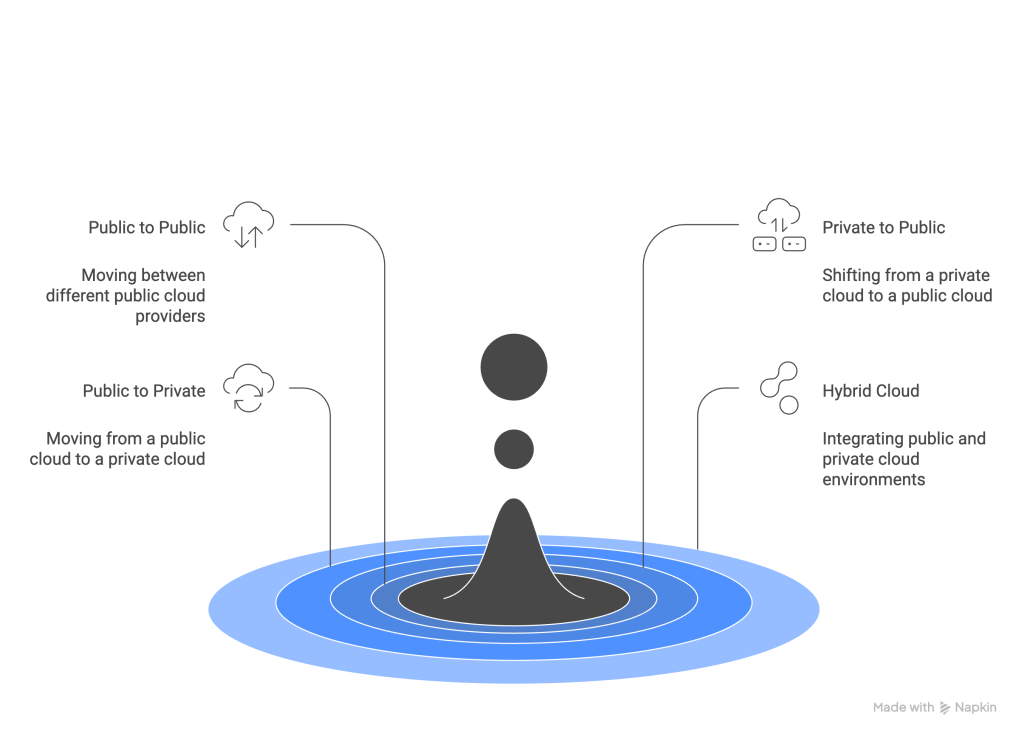
By 2025, over 85% of organizations have adopted a multi-cloud strategy, according to recent industry research. As businesses grow and technology evolves, many find their initial cloud choice no longer meets their needs. This creates demand for cloud-to-cloud migration—the process of moving data, applications, and workloads from one cloud platform to another.
Whether you’re considering a switch from AWS to Azure, moving to Google Cloud Platform, or implementing a multi-cloud approach, understanding this process is essential. This guide explores what cloud-to-cloud migration involves, why businesses make the move, and how to ensure success.
What is Cloud-to-Cloud Migration?
Cloud-to-cloud migration transfers your digital assets between different cloud service providers. Unlike traditional on-premise to cloud migration, both your starting point and destination are cloud-based platforms.
Think of it like moving between apartments rather than moving from a house to an apartment. You’re already in a managed environment, but you’re seeking better features, location, or value.
Common migration scenarios include:
- Moving from AWS to Microsoft Azure for better integration with existing Microsoft tools
- Switching from one provider to another for cost optimization
- Adopting a multi-cloud strategy to avoid vendor lock-in
- Consolidating multiple cloud environments into a single platform
The process can involve transferring databases, applications, storage systems, and entire computing environments. Each migration requires careful planning to maintain business continuity.
Why Businesses Choose Cloud-to-Cloud Migration
Organizations migrate between cloud platforms for compelling strategic and financial reasons.
Cost Optimization
Cloud spending continues to grow, with Gartner projecting worldwide end-user spending on public cloud services to reach $679 billion in 2024. Different providers offer varying pricing models. A database-heavy workload might cost 30-40% less on one platform compared to another. Companies regularly save six figures annually by switching providers based on their specific usage patterns.
Enhanced Performance
Newer services and updated infrastructure can dramatically improve application performance. Organizations report up to 50% faster processing times after migrating to platforms with more advanced computing capabilities. Geographic availability also matters—switching to a provider with data centers closer to your users reduces latency.
Superior Features
Cloud providers constantly innovate at different paces. One platform might offer cutting-edge machine learning tools, while another excels in container orchestration. Businesses often migrate to access specific services that better align with their technical roadmap. When working with cloud migration consulting services, organizations can identify which platform best matches their requirements.
Compliance and Security
Regulatory requirements vary by industry and region. Some cloud providers offer better compliance certifications for specific sectors like healthcare or finance. Enhanced security features or regional data sovereignty requirements frequently drive migration decisions.
Avoiding Vendor Lock-in
A multi-cloud strategy provides flexibility and negotiating power. According to Flexera’s State of the Cloud Report, 87% of enterprises have a multi-cloud strategy. This approach prevents over-dependence on a single provider and enables businesses to leverage best-of-breed services.
Key Challenges and How to Overcome Them
Cloud-to-cloud migration presents distinct obstacles that require strategic solutions.
Data Transfer Complexity
Moving terabytes or petabytes of data between clouds takes time and bandwidth. Large transfers can take days or weeks, depending on connection speeds. Solution: Use dedicated network connections or physical data transfer services offered by major cloud providers. Schedule migrations during low-traffic periods to minimize impact.
Compatibility Issues
Each cloud platform uses different architectures, APIs, and services. Applications built for one environment may not work seamlessly on another. Solution: Conduct thorough compatibility assessments before migration. Consider containerization technologies like Kubernetes, which provide consistency across different cloud environments.
Security Risks
Data in transit is vulnerable to interception or loss. Misconfigured security settings during migration can expose sensitive information. Solution: Encrypt all data during transfer. Implement zero-trust security protocols. Verify access controls are properly configured before going live.
Cost Management
Migration itself costs money—both the technical expenses and potential downtime. Hidden costs emerge without proper planning. Solution: Create detailed cost projections including data transfer fees, temporary dual-environment costs, and staff time. Many organizations benefit from cloud operations management to maintain budget control.
Staff Training
Teams familiar with one platform need time to learn another’s tools and interfaces. This learning curve can slow operations temporarily. Solution: Invest in comprehensive training programs. Partner with cloud service providers who offer knowledge transfer and ongoing support.
Best Practices for Successful Cloud-to-Cloud Migration
Strategic planning separates successful migrations from problematic ones.
Comprehensive Assessment
Document everything you’re currently running. Identify dependencies between applications and services. Understand your data flows and integration points. This inventory becomes your migration roadmap.
Choose the Right Strategy
Three main approaches exist:
- Lift-and-shift: Move applications as-is with minimal changes. Fastest but doesn’t optimize for the new platform.
- Re-platforming: Make targeted modifications to leverage cloud-native features while keeping core architecture intact.
- Refactoring: Rebuild applications to fully utilize new platform capabilities. Most time-intensive but yields maximum benefits.
Select based on your timeline, budget, and long-term goals.
Rigorous Testing
Test everything before full cutover. Run parallel environments to verify functionality. Performance test under realistic loads. Have rollback plans ready if issues arise.
Phased Migration
Move less critical workloads first. Learn from initial migrations before tackling mission-critical systems. This reduces risk and builds team confidence. Managed cloud hosting solutions can provide stability during the transition period.
Post-Migration Optimization
Migration completion isn’t the finish line. Monitor performance metrics closely. Optimize configurations based on actual usage patterns. The first few months reveal opportunities for cost savings and performance improvements.
Conclusion
Cloud-to-cloud migration represents a strategic opportunity to optimize your technology infrastructure. While challenges exist around data transfer, compatibility, and security, proper planning and execution make the process manageable.
Success requires understanding your current environment, clearly defining goals, and following proven methodologies. Organizations that approach migration strategically see significant benefits in cost, performance, and operational flexibility.
The cloud landscape continues evolving rapidly. Staying with your initial provider because migration seems daunting means missing opportunities for improvement. Whether you’re pursuing cost savings, better features, or enhanced security, cloud-to-cloud migration can transform your business operations.
Ready to explore your migration options? Start with a thorough assessment of your current environment and desired outcomes. The right planning today creates technological advantages tomorrow.